Where Your Risk Actually Sits: Original vs Clone
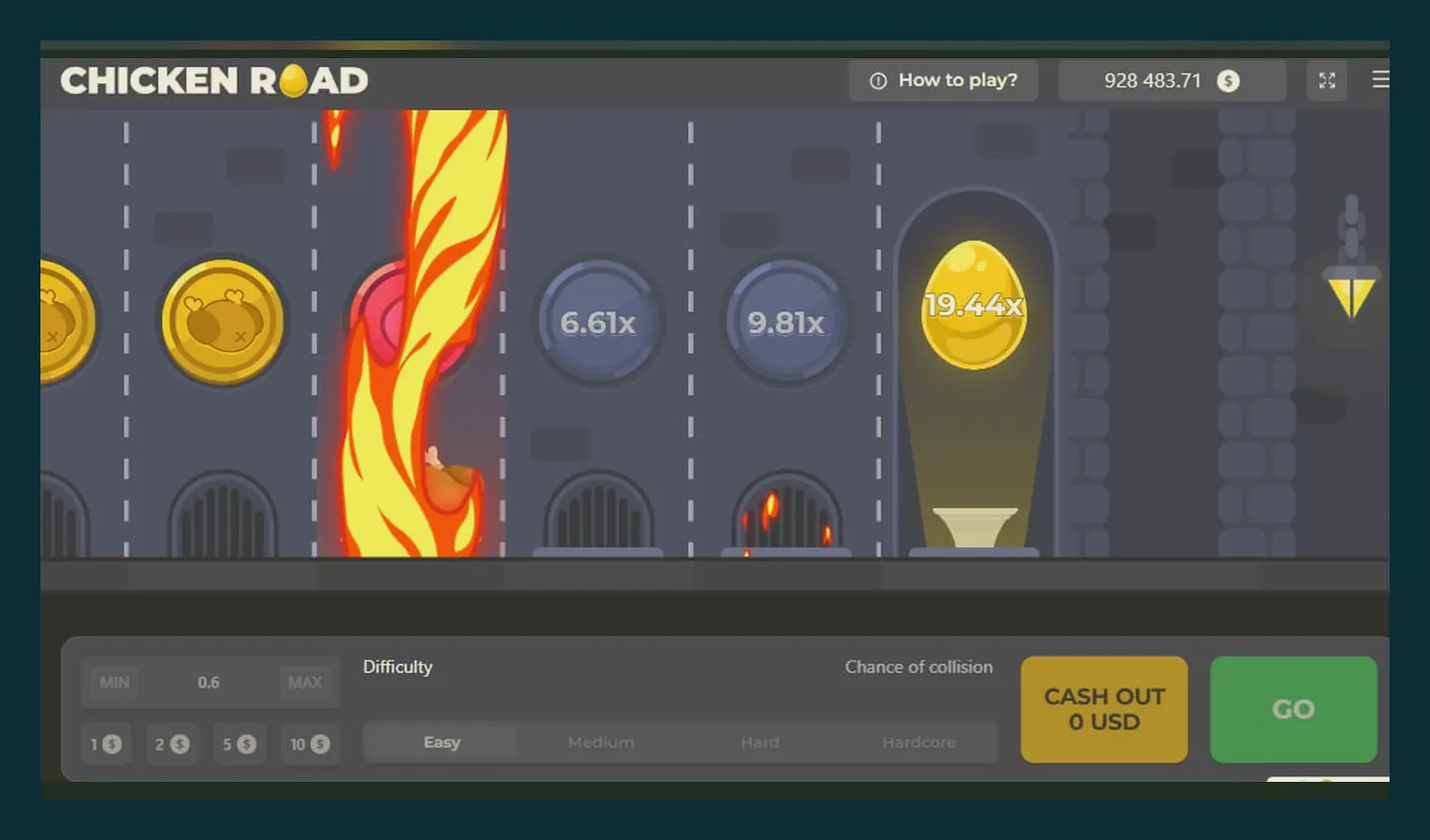
Two sites offer «Chicken Road 2». One holds a UKGC remote licence, publishes RTP, caps your stake at £5.00, and connects to GAMSTOP. The other sits offshore, lists no regulator, accepts £50 bets, and disappears when you request a withdrawal. Both look identical at first glance.
The original matters because only the licensed version gives you legal recourse, tested fairness, and deposit limits that trigger affordability checks from £150 a month. Clones skip the oversight, tamper with RTP, and leave you outside the protections of the Gambling Act. This page shows you the mechanics of the real game, where it runs, and a ten-second check that confirms you are playing the certified build.
Who Built It and Why the Certification Matters
The original Chicken Road 2 comes from a studio whose name appears in the game-info panel and whose build carries an eCOGRA or iTech Labs certificate. That certificate means an independent lab tested the random-number generator, verified the stated RTP, and confirmed that the paytable matches the published spec sheet. UKGC operators can only host games that pass this audit.
Clones strip the certification badge, re-skin the graphics, and tweak the backend to lower RTP or cap wins. Because they sit outside UK jurisdiction, they ignore the £5 and £2 stake caps by age, skip affordability checks, and accept credit cards—banned for gambling here since 2020. When a dispute arises, the UKGC register offers no record of the clone, and your bank cannot initiate a chargeback under Section 75 because the transaction went to an unlicensed merchant.
How a Round Works from Your Seat
You open the game lobby, tap Chicken Road 2, and set your stake—anywhere from £0.10 to £5.00 if you are 25 or older, or £0.10 to £2.00 if you are aged 18–24. The grid appears: five columns, five rows, 25 tiles. Some tiles hide chickens (safe), others hide foxes (instant loss). The number of foxes depends on the difficulty you chose—easy has fewer, hard has more.
You click a tile. If it shows a chicken, your running win multiplier increases and you can click another tile or cash out. Each safe tile you reveal multiplies your stake by a factor that grows with the number of foxes in play. If you hit a fox, the round ends and you lose the stake. Cash out before a fox and you collect the displayed win. The RNG decides tile positions the moment you click «Play», so no pattern or timing trick changes the outcome.
- Set stake within your account's deposit limit and the regulatory cap.
- Choose difficulty: more foxes mean higher multipliers per safe tile but shorter expected runs.
- Click tiles one by one; each safe chicken raises your multiplier.
- Cash out when the risk feels too high, or keep going and risk hitting a fox.
- Winnings credit instantly; wagering requirements apply if you used a bonus.
The Real Numbers: Bet Range, RTP, and Max Win
The certified build lists these figures in the game-info panel. RTP sits around 97–99%, depending on difficulty—higher fox counts push RTP up because the multipliers grow faster. Variance is high: long stretches without a big win are normal, then a deep run pays 500–1,000× your stake. The max win caps at a number the operator sets, often £10,000 or £25,000 per round, to manage their own risk.
Clones often advertise «no stake limit» and «unlimited wins». In practice, they lower RTP to 92% or less, cap payouts arbitrarily mid-round, and refuse large withdrawals by citing phantom terms. The certified version publishes all limits upfront and honours every displayed win, subject to the site's general withdrawal cap and your affordability tier.
Mechanics One by One: Tiles, Multipliers, and Volatility
Each tile holds a binary outcome decided by the RNG at round start. The number of foxes you selected sets the distribution: easy mode might place 3 foxes among 25 tiles, hard mode 10. Every safe chicken you reveal increases your multiplier by a factor calculated from the remaining safe tiles. The formula ensures that deeper runs pay exponentially more, but the probability of hitting a fox rises with each click.
- Tile reveal: instant; no animation delay affects the RNG result.
- Multiplier growth: each safe tile compounds the previous multiplier, not a flat addition.
- Cash-out: available after every tile; the displayed amount is what you receive, minus any bonus wagering.
- Auto cash-out: some versions let you set a target multiplier; the game stops automatically if you reach it before a fox.
Volatility means you will see more losing rounds than winning ones, but the winning rounds pay enough to offset losses over hundreds of rounds—if you play within your budget and do not chase. The maths works only if you stop when the session budget runs out, a discipline deposit limits and session timers help enforce.
Which Clones Circulate and How They Differ
Three clone families appear in UK search results. The first keeps the name and graphics but strips the licence footer and hosts on a Curaçao domain. The second renames the game «Fox Hunt» or «Tile Rush», changes the art style, and runs on white-label casino software sold to unlicensed operators. The third is a web app distributed as an APK file on Telegram, marketed as «original game, no KYC». None holds a UKGC licence.
| Feature | Original (UKGC) | Offshore Clone | APK Clone | |
|---|---|---|---|---|
| Licence | UKGC register | Curaçao or none | None | → |
| Stake Cap | £2–£5 by age | No cap | No cap | → |
| RTP Audit | eCOGRA/iTech | Undisclosed | Undisclosed | → |
| GAMSTOP Link | Yes | No | No | → |
| KYC | Before withdrawal | Often skipped | None | → |
| Withdrawal Time | 24 h–3 days | Delayed/refused | Crypto only, uncertain | → |
| Credit Card | Banned | Accepted | Crypto only | → |
| Legal Recourse | UKGC ADR | None | None | → |
The offshore clone advertises faster withdrawals and no limits, then stalls payout requests with vague «verification» emails. The APK version asks for a deposit in Bitcoin or USDT, promises instant withdrawals, and vanishes after you fund the account. Both exploit the fact that players searching «Chicken Road 2 app» or «demo free play» land on clone sites before finding the licensed original.
Six-Second Check That You Are on the Original
- Scroll to the footer and find a UKGC licence number—it looks like «000-123456-R-123456-001».
- Open the UKGC public register and paste that number into the search box.
- Confirm the operator name matches the site you are on and the licence status is «Active».
- Open the game-info panel inside Chicken Road 2 and check for an eCOGRA or iTech Labs badge.
- Look at the stake selector: if it allows more than £5.00 per round (or £2.00 if you set your age 18–24), you are on a clone.
- Try adding a credit card in the cashier; if the site accepts it, walk away—credit cards have been banned for gambling here since 2020.
This check takes six seconds and saves you from depositing into a site that will refuse your withdrawal or sell your card details. The original runs on every major UKGC-licensed casino: you will see it listed next to other certified crash games in the lobby, with a demo-play button for logged-in accounts and the same stake caps across all operators.
FAQ
Does the original Chicken Road 2 have an app for iPhone or Android?
The original runs in your mobile browser on any UKGC-licensed site; there is no standalone app in the App Store or Google Play. Some clones distribute APK files on Telegram or third-party stores—those are unlicensed copies. Open the licensed casino in Safari or Chrome, log in, and launch the game from the lobby. It adapts to your screen size and works exactly like the desktop version, with the same £5.00 or £2.00 stake cap depending on your age.
Why does my stake cap show £2.00 when other players mention £5.00?
UKGC rules set a £2.00 maximum per spin for players aged 18–24 and £5.00 for those 25 and older. The operator checks your date of birth during registration and applies the correct cap automatically. This limit covers all slots and RNG games, including crash games like Chicken Road 2. When you turn 25, the cap lifts to £5.00 on your next login. Clones ignore this rule entirely, which is one way to spot them.
Can I play the original for free without depositing?
Yes, but only after you register and verify your age. UKGC sites must confirm you are 18 or older before showing any gambling content, including demo play. Once verified, you will see a «Play for Fun» or «Demo» button next to Chicken Road 2 in the lobby. The demo uses the same RNG and rules as real-money play, so it is useful for learning the mechanics and testing your cash-out discipline without risk. Clones offer instant free play with no age check—a legal violation here.
What happens if I win more than the affordability tier allows?
The game pays every displayed win up to its max-win cap, but the operator may pause your withdrawal if the total triggers an affordability check. From £150 net deposits per month, the site uses credit-reference data to assess whether your gambling spend fits your financial situation. If the check raises concerns, the operator will ask for payslips, bank statements, or other evidence before releasing funds. This process can take 72 hours to a week. It is not the game blocking you—it is the Gambling Commission's rules protecting players from harm. Clones skip this step, pay out once or twice to build trust, then refuse large wins with no explanation.